
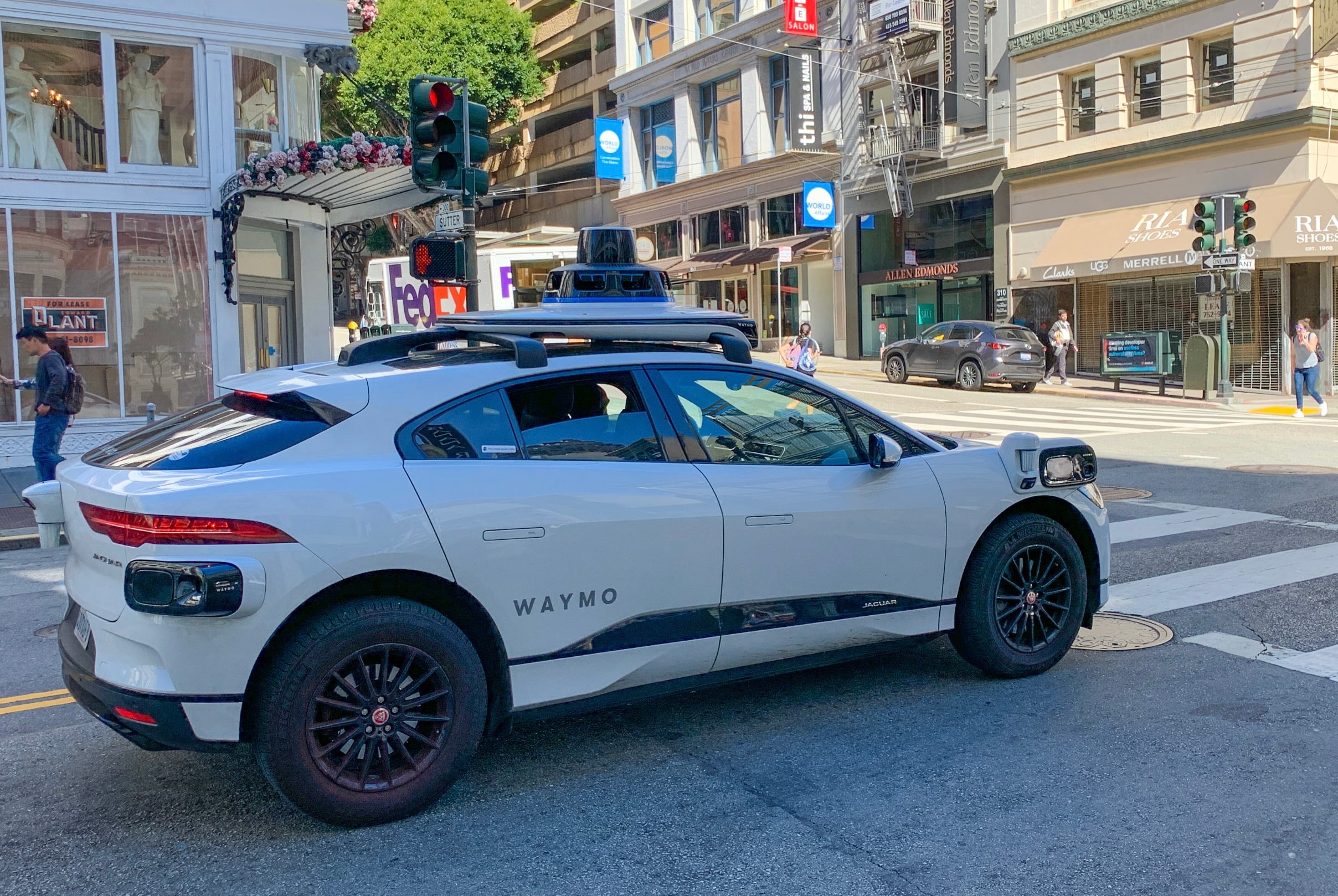
One week ago, City Councilor Mitch Green broke the news that autonomous vehicle company Waymo wanted to operate on Portland streets. Sharing a link to a story about a Waymo robotaxi hitting and hurting a child near a school in in Southern California, Green wrote on Bluesky: “You should know that Waymo wants to come to Portland. You should know I don’t support that.”
Two days later the Waymo news was confirmed by Willamette Week and now there’s a bipartisan bill up for debate in the Oregon Legislature that aims to smooth the road to full deployment of robotaxis statewide.
This news could lead to a collision between Portland city councilors, Alphabet (the corporate parent of Google who owns Waymo), city staffers, and state lawmakers.

Councilor Green is opposed to robotaxis based mostly on labor-related issues. He’s worried robotaxis would make life even harder for existing rideshare drivers. Beyond that, he says data privacy is also a concern. Green has said he’s open to learning more about how robotaxis would impact traffic safety and congestion.
Portland Bureau of Transportation Director Millicent Williams is also taking a cautious approach thus far. Thanks to reporting in the Willamette Week, we know that Williams has expressed to city leaders via internal emails that AVs may bring safety benefits, but, “They may also have significant impacts on our local transportation system. They may add additional miles driven on our streets, cause curb zone conflicts during pickups and drop-offs, present challenges for first responders, and more.”
Down in Salem, State Representative Susan McLain, a Democrat and chair of the House Transportation Committee, has introduced a bill with Republican House Rep Shelly Boshart Davis that appears to have been written by AV lobbyists (since November 2025, lobbying firm Google Client Services, LLC has donated $2,500 each to bill sponsors Senator Mark Meek and Rep. Hai Pham, as well as $2,500 to Rep. Ben Bowman, $1,000 to Sen. Floyd Prozanski, $1,500 to Senate President Rob Wagner, and $10,000 to Governor Tina Kotek).
House Bill 4085 would lay a legal groundwork for the operation of self-driving vehicles in Oregon. Typically during a short legislative session, lawmakers only consider bills that are non-controversial, have been vetted in a previous session, and/or have no fiscal impact. While lawmakers have considered AV-related bills in the past, HB 4085 goes further than anything before it.
One of the provisions in HB 4085 that’s raising eyebrows is section 13 which states:
“A local government or local service district may not: (a) Prohibit the operation of an autonomous vehicle or on-demand autonomous vehicle network; (b) Impose a tax, fee, performance standard or other requirement specific only to the operation of an autonomous vehicle or on-demand autonomous vehicle network.”
That “specific only” part means that taxes and fees can be charged to AV network operators, but only if similar types of fees are levied to other competing types of taxi companies. This exception would allow Portland to levy a fee on any potential robotaxi trips because we already charge a service fee for Uber and Lyft rides.
But other provisions in the bill could kneecap the ability of local policymakers to regulate robotaxis as they see fit. Given that PBOT Director Williams recently said, AVs, “Will have the greatest impacts on local jurisdictions and it makes sense that the city of Portland would want to ensure that we could maintain an AV regulatory framework to meet our needs and to be able to mitigate any negative local impacts,” I doubt she’ll be too happy about HB 4085.
In a statement to BikePortland this morning, Councilor Green made his stance on HB 4085 clear:
“I oppose this bill’s effort to preempt our ability to locally regulate autonomous vehicles. It’s particularly appalling that the Oregon State Legislature would even consider introducing new factors that contribute to VMT, congestion and potential road safety issues after their catastrophic failure to deliver a transportation bill, which has undermined the viability of our transit agencies and the ability for municipalities to deliver basic, routine upkeep of our transportation assets.”

Fortunately for the City of Portland, they are not new to the AV question. Back in 2016 PBOT was tapped by a US DOT “Smart Cities” initiative to be one of the testing grounds for AV fleets. That let to the Smart Autonomous Vehicle Initiative (SAVI), a plan that set some ground rules for what many thought at the time would be the imminent deployment of robotaxis. One outcome of the SAVI effort was Transportation Rule Number 14.34, “Connected and Autonomous Vehicles.” That rule requires AV operators to have a permit, pay fees, and so on. (Last month, Director Williams said that rule is now outdated and needs to be amended.)
In April 2017, Portland city leaders were falling over themselves to welcome these driverless cars to our streets. “To the inventors, investors and innovators, I’m here to say that Portland is open for business,” proclaimed former Mayor Ted Wheeler. “By working with private industry, we can make sure that cutting edge technology expands access to public transit and reduces pollution and congestion.”
That was a different era in Portland politics, and the general public is likely much more skeptical of AV companies today. Councilor Green is likely to find support for his concerns among his colleagues, especially Councilor Steve Novick. Novick made headlines back in 2014 when Uber tried to bully its rideshare vehicles into Portland without permission.
12 years later, we might be on the cusp of yet another showdown about the impacts of corporate transportation on our streets.
— If you’d like to weigh in on HB 4085, there’s a public hearing scheduled for Monday, February 9th at 8:00 am in the House Committee on Transportation.