
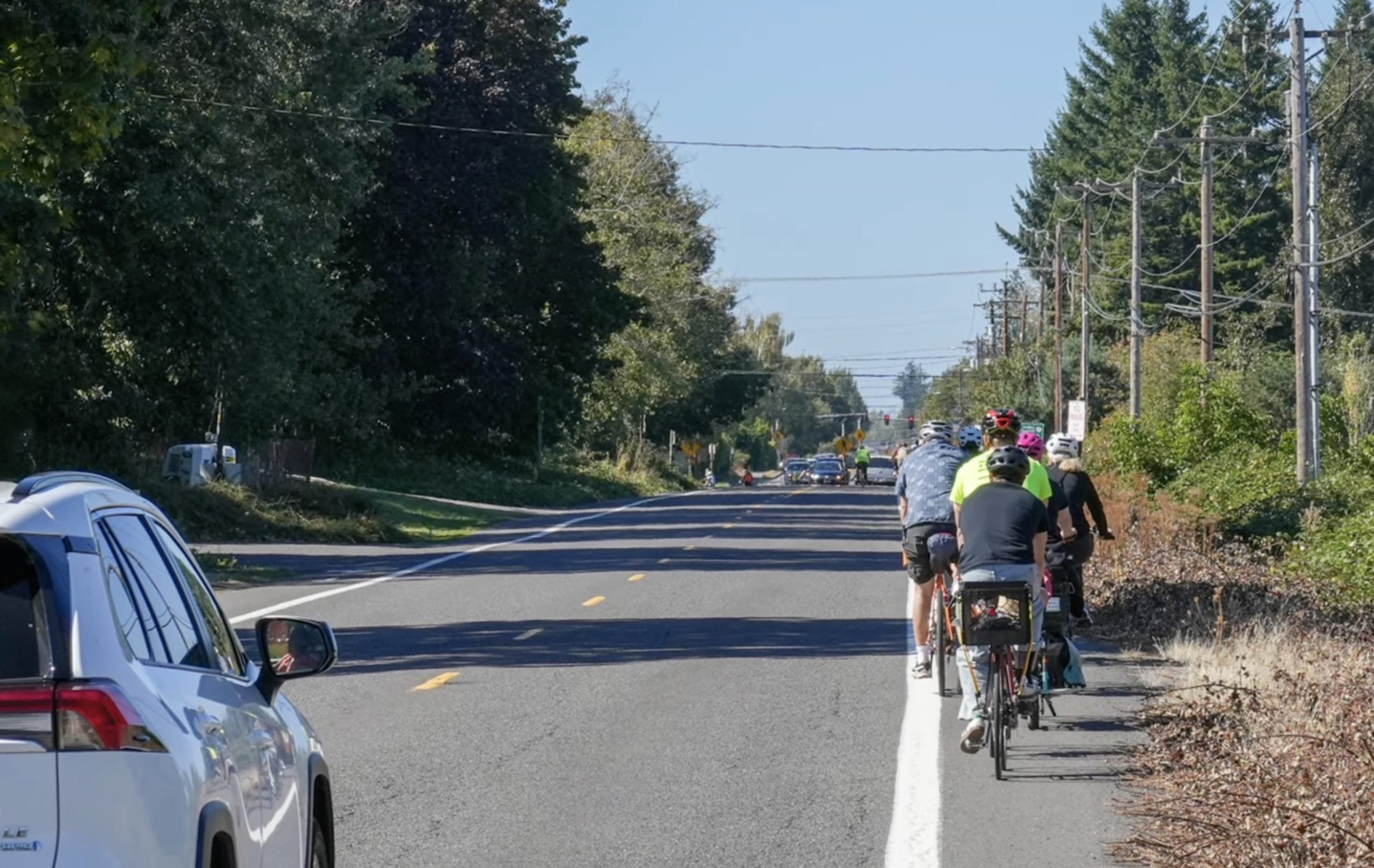
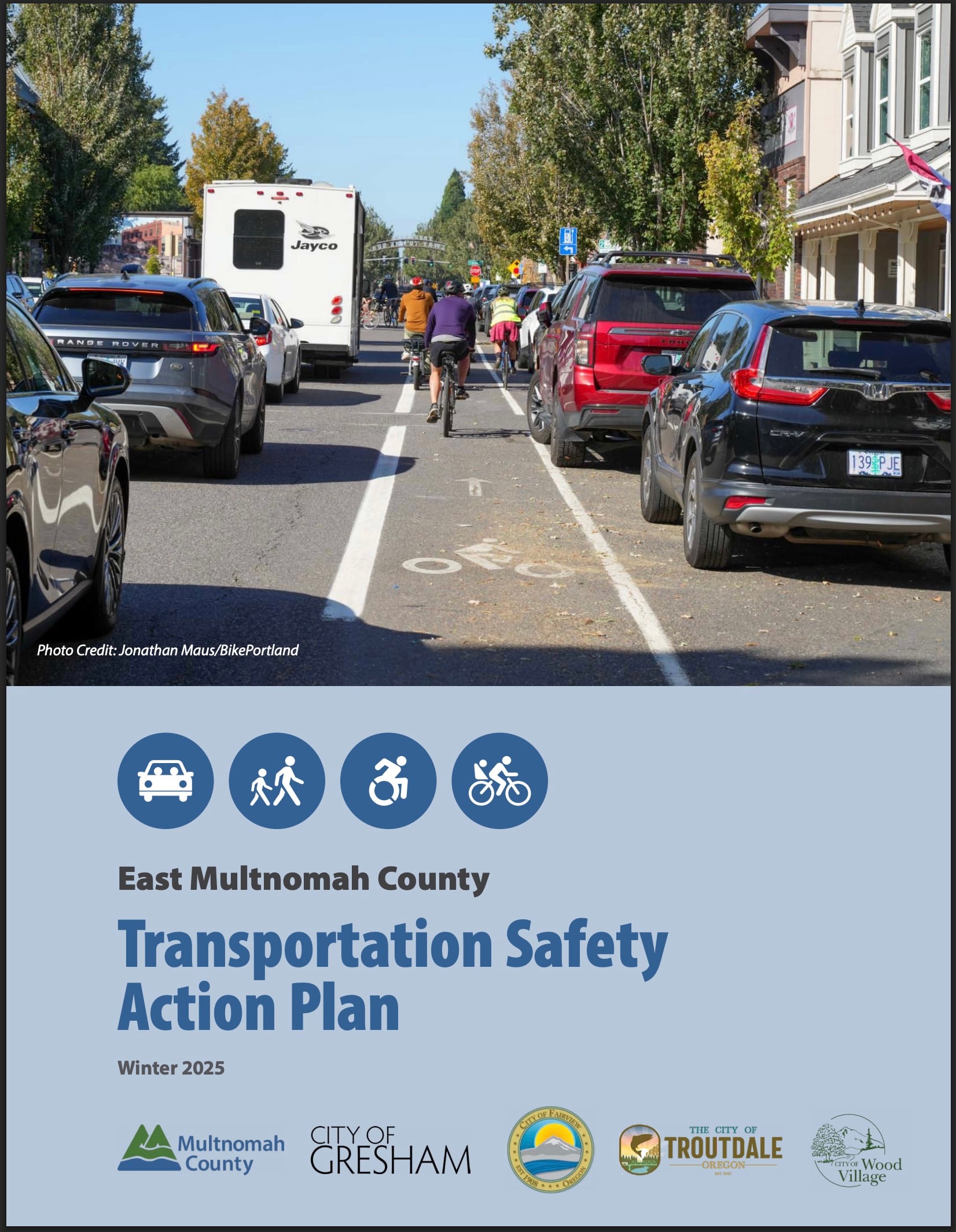
East Multnomah County took a big step toward taming dangerous streets last week when the County Commission voted to adopt their Transportation Safety Action Plan, which comes with the goal of zero traffic deaths by 2035. “No loss of life is acceptable, and we must ensure our streets are safe for all community members to travel, including those who walk, use bicycles, take transit, or use mobility devices,” states the 67-page plan.
The new plan was a joint effort by the cities of Gresham, Fairview, Troutdale, and Wood Village. The City of Portland proclaimed the same goal in 2015, but as of last year we are still far short of the zero deaths goal. Hopefully these cities do better than we have. It will be no easy task, given the state of roads in east county and the fact that this plan comes with no dedicated funding to implement its recommendations.
Traffic crashes that result in death or serious injury are a “major public heath concern,” said Multnomah County Health Department Manager Brendon Haggerty at the Commission meeting last week. According to Multnomah County and Oregon Department of Transportation (ODOT) crash data, 104 people died in east County crashes and 473 people were seriously injured between 2013 and 2022. Haggerty said traffic crashes are a leading cause of death for folks who live in East Multnomah County and they are impacted at a disproportionate rate as folks closer to the central city. “For example, we found that the rate of years of potential life lost in East County was roughly double what it was in the central city,” Haggerty told commissioners.

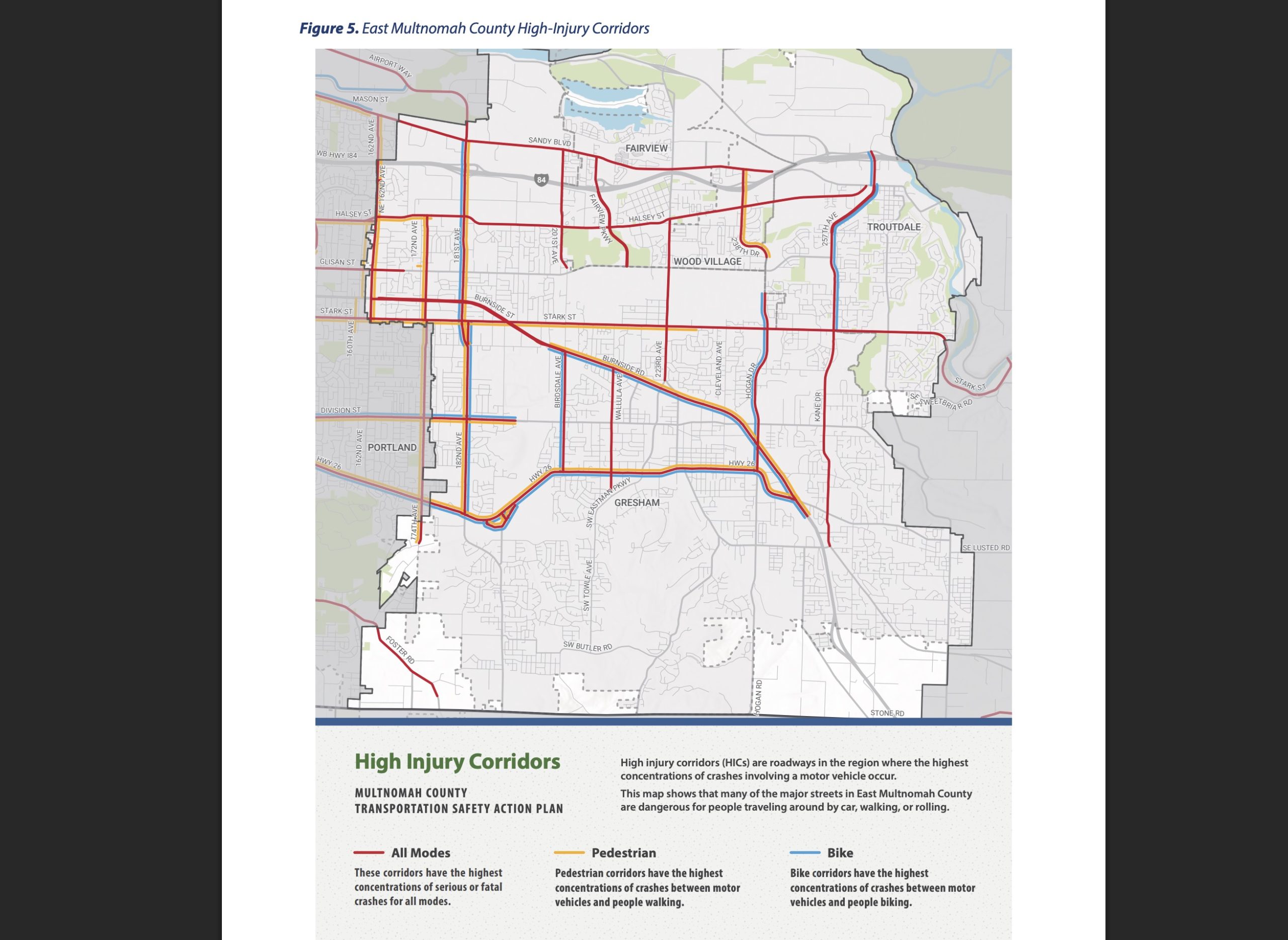
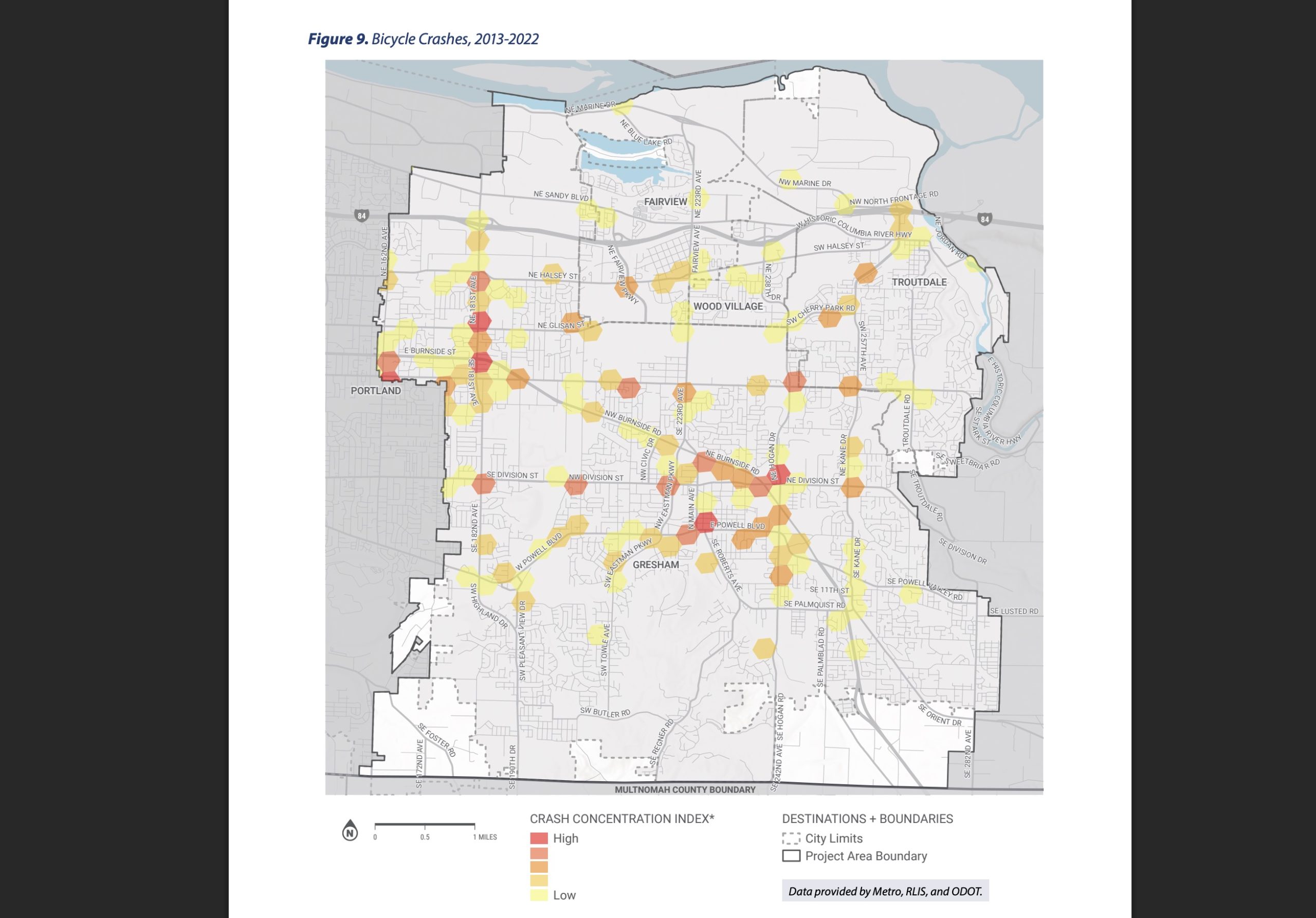
It will come as no surprise that the big culprit for unsafe streets in east county are fast and wide arterial streets — which are where most of the deaths and serious injuries occur. The map of high injury corridors (above) criss-cross the entire region, so there’s really no escape. One local resident’s feedback shared in the plan stated, “All the busy roads make it hard to make my bus transfers. Sometimes there’s no crosswalk that gets there and I have to run.” When people can’t move through their community easily and safely, they can’t participate fully in its economy. That fact is top of mind for Commissioner Vince Jones Dixon, who represents East Multnomah County. In a speech at the Policymakers Ride in September, he said, “The thing that drove me to public office has been community safety and economic empowerment. And one of the main connectors is being able to travel safely throughout communities.”
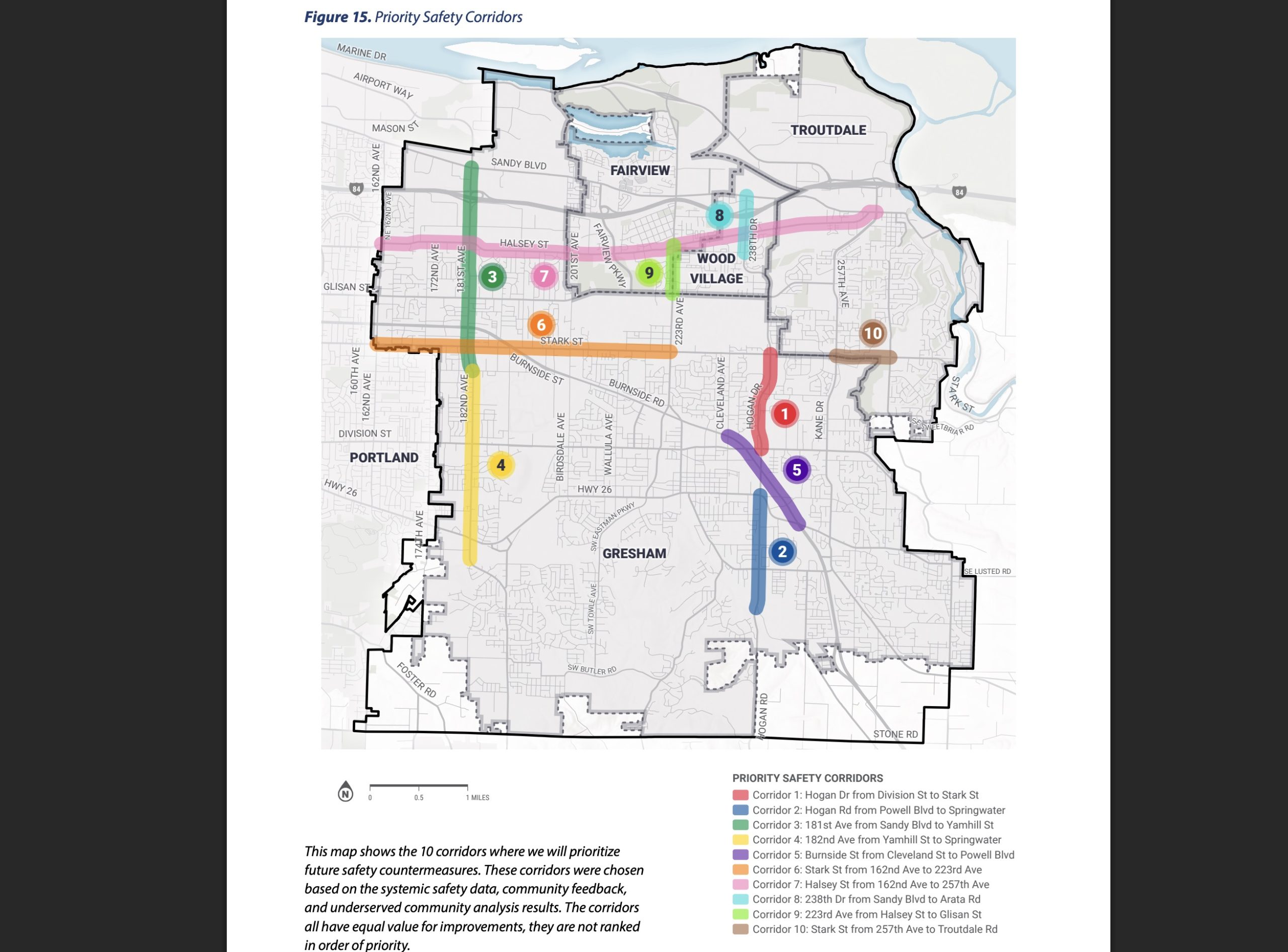
Another important part of this new plan are the 10 “priority safety corridors” the county has identified (see below). Similar to the City of Portland’s “high crash network,” these intimidating corridors will become ground zero for safety interventions and investments:
- Corridor 1: Hogan Dr from Division St to Stark St
- Corridor 2: Hogan Rd from Powell Blvd to Springwater
- Corridor 3: 181st Ave from Sandy Blvd to Yamhill St
- Corridor 4: 182nd Ave from Yamhill St to Springwater
- Corridor 5: Burnside St from Cleveland St to Powell Blvd
- Corridor 6: Stark St from 162nd Ave to 223rd Ave
- Corridor 7: Halsey St from 162nd Ave to 257th Ave
- Corridor 8: 238th Dr from Sandy Blvd to Arata Rd
- Corridor 9: 223rd Ave from Halsey St to Glisan St
- Corridor 10: Stark St from 257th Ave to Troutdale Rd
For advocates and community leaders who want to improve road safety, this plan is an excellent informational resource. The detailed maps show where the problems are and the recommendations (based on the same “Safe Systems” approach used by the Portland Bureau of Transportation) provide a roadmap for how to implement them. Beyond the zero deaths goal, the new plan details several short, medium, and long-term actions. Short-term actions are defined as things that can happen in 1-3 years and include:
- Pursue grants and other funding sources that can be used for safety projects.
- Create program to fund and implement quick build and low-cost safety projects.
- Continue to gather public feedback and empower the public to share roadway safety concerns.
- Add speed feedback signs paired with enforcement along high injury corridors and in school zones.
- Develop a program to enforce speed limits and vehicles stopping at stop signals through automated speed safety cameras and movable ticket vans.
With this plan completed and adopted, there’s no excuse for the status quo to continue. It’s time for east county leaders to “prioritize safety over speed,” urged Metro Councilor (and former Executive Director of nonprofit Oregon Walks) Ashton Simpson at last week’s meeting. “Without real tangible action, the goal is only as strong as the paper it’s written on.”
— If you’re ready to get involved in making streets safer in east county, one of the best ways to engage is to follow the East Multnomah County Transportation Committee (EMCTC).